

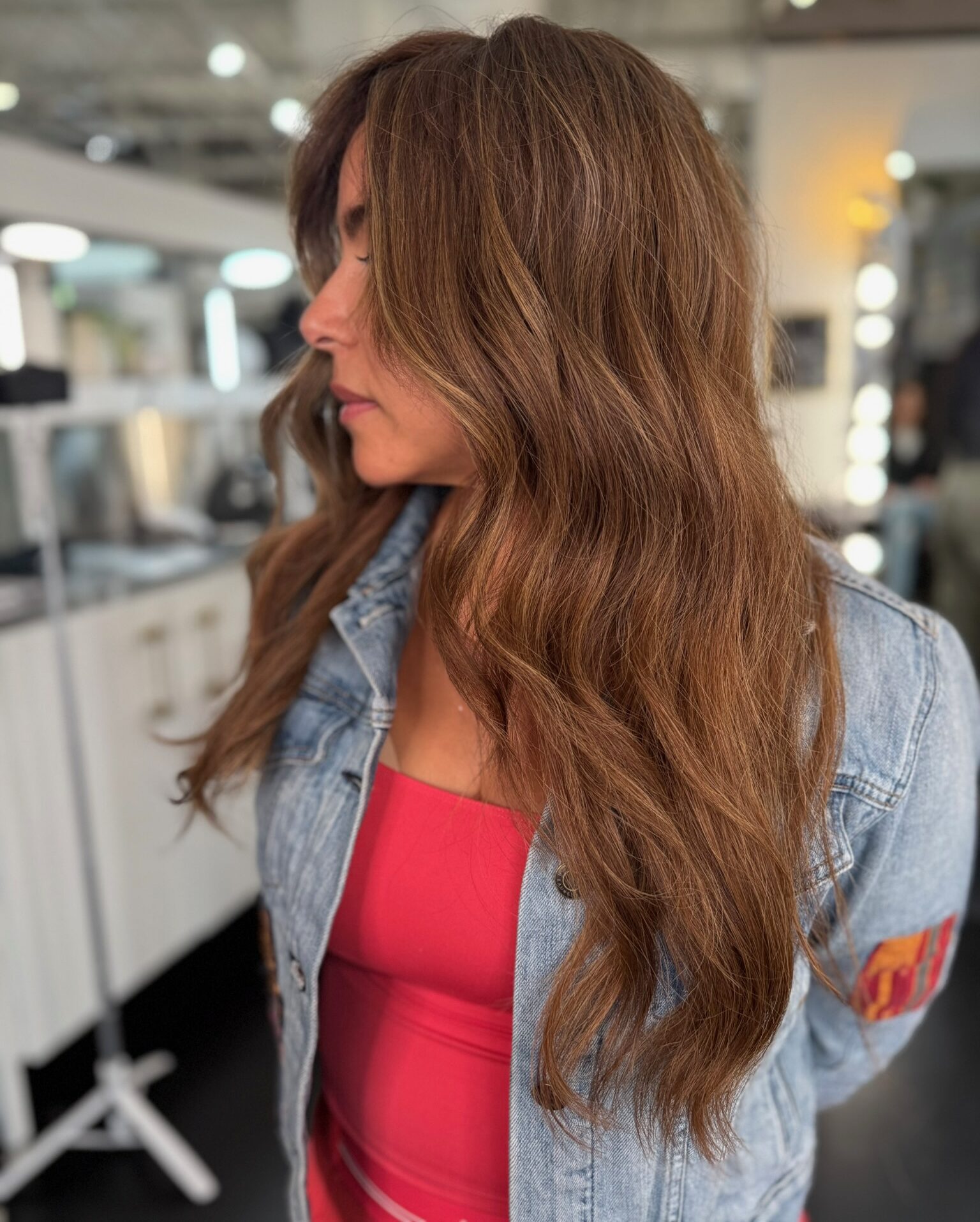
Hand-Tied Hair Extensions vs Tape-In Extensions: Which Is Better for Your Hair?
If you are researching hair extensions, you have likely come across two of the most popular options: hand-tied hair extensions and tape-in extensions. Both can add length and volume, but they differ significantly in how they are installed, how they feel, and how they impact long-term hair health.
Understanding the differences can help you choose the option that best fits your hair type, lifestyle, and goals.
What Are Hand-Tied Hair Extensions?
Hand-tied hair extensions are installed by sewing lightweight wefts onto a row of beads placed along the scalp. This method distributes weight evenly, reducing tension and creating a natural, flexible result.
Hand-tied extensions are known for their seamless blend, comfort, and ability to be fully customized to each client.
What Are Tape-In Hair Extensions?
Tape-in extensions use adhesive strips that are sandwiched around sections of natural hair. They lay flat against the head and can be a good option for short-term wear or simpler transformations.
Tape-ins are quicker to install than hand-tied extensions but require careful maintenance to avoid visible tapes or adhesive buildup.
Key Differences Between Hand-Tied and Tape-In Extensions
Installation Method
Hand-tied extensions are sewn into place, allowing for precise placement and weight distribution. Tape-ins rely on adhesive, which can be affected by oils, sweat, and certain hair products.
Comfort and Wear
Hand-tied extensions feel lightweight and flexible, making them comfortable for daily wear and styling. Tape-ins can feel heavier in certain areas and may be noticeable as they grow out.
Maintenance Schedule
Hand-tied extensions typically require maintenance every 6 to 8 weeks. Tape-in extensions often need to be moved up more frequently, sometimes every 4 to 6 weeks.
Hair Health
Because hand-tied extensions distribute weight evenly, they are often preferred for clients concerned about hair health. Tape-ins can cause stress on the hair if not installed or removed properly.
Styling and Versatility
Hand-tied extensions allow for versatile styling, including updos and ponytails, without visible attachment points. Tape-ins may limit certain styles depending on placement.
Which Option Is Better for Fine or Thin Hair?
For clients with fine or thinning hair, hand-tied extensions are often the better option. The customizable placement and even weight distribution help minimize stress on delicate hair.
Tape-in extensions can work for some hair types but may not be ideal for clients with fragile or sparse hair.
Which Extensions Look the Most Natural?
Hand-tied extensions are widely considered the most natural-looking option. The wefts are custom cut and blended to match your natural hair, creating a seamless finish.
Tape-in extensions can look natural when installed correctly, but improper placement or grow-out can make them more noticeable.
How to Choose the Right Hair Extensions for You
The best extension method depends on your hair type, lifestyle, and desired result. A professional consultation allows your stylist to evaluate your hair and recommend the safest, most flattering option.
If you are considering professional hair extensions and want a natural, long-lasting solution, explore your options here:
https://thegarnishcollective.co/services/extensions/
Schedule a Consultation
Choosing the right hair extension method is an important decision. A personalized consultation ensures you receive expert guidance and a solution tailored to your hair.
Schedule a consultation with The Garnish Collective to find the best extension method for your goals and lifestyle.